


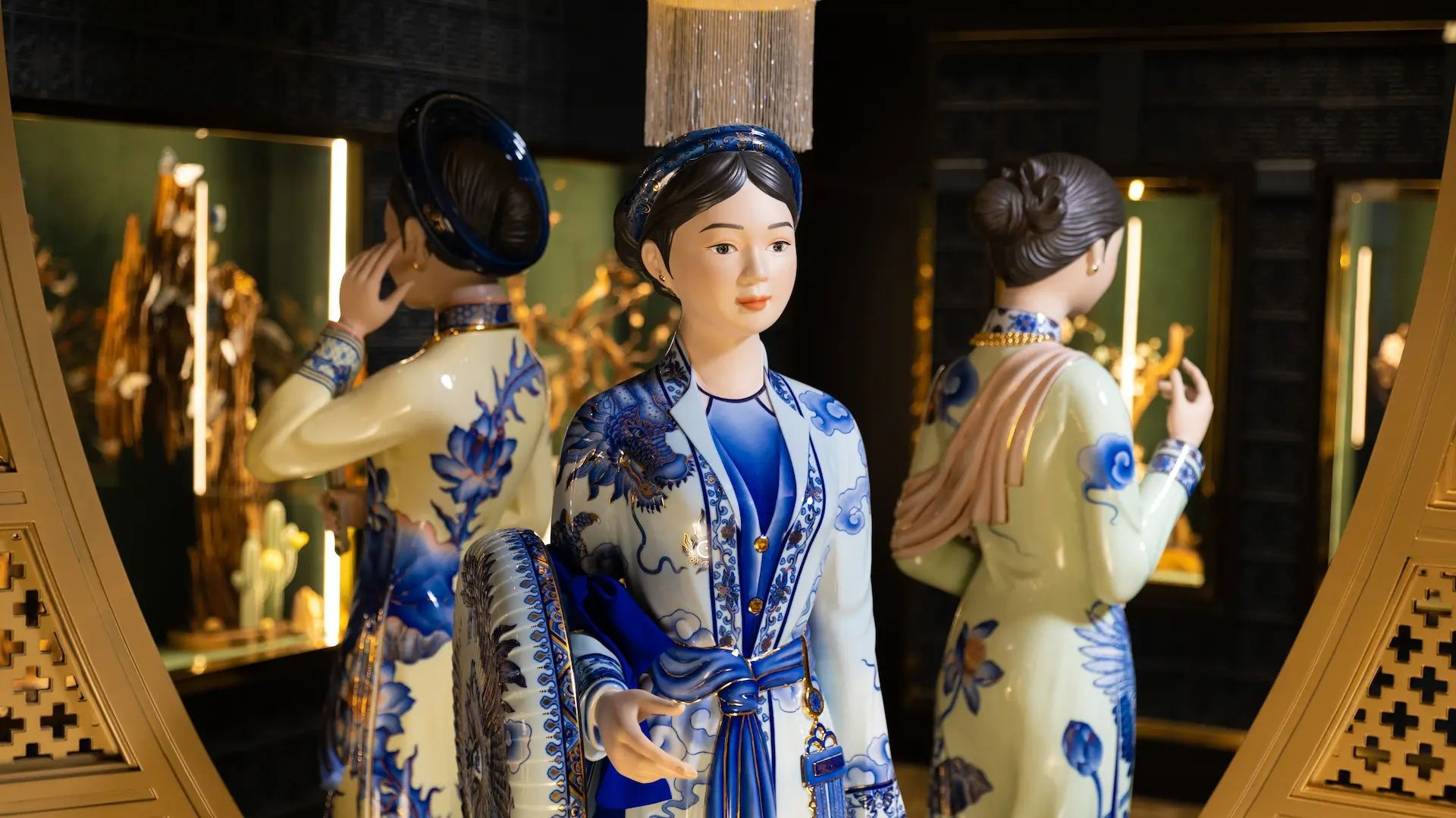
Each statue represents the characteristics of each region, with delicate costumes contributing to honoring the beauty of Vietnamese women, preserving beautiful impressions of a country with kind-hearted people.
This sculptural ensemble is a poetic embodiment of national harmony, celebrating the unity of Vietnam through the graceful image of its women. Each statue represents the distinct spirit and cultural identity of one region of the country, expressed through richly detailed costumes and gestures that honor the timeless beauty of Vietnamese women. Together, they preserve vivid impressions of a land and a people known for kindness, compassion, and deep human connection.
Each statue stands 1.7 meters tall and is fired as a single porcelain form at 1,380°C. The scale and weight of the figures posed exceptional technical challenges during firing, demanding absolute precision and mastery. Yet it is precisely this technical rigor that allows the statues to stand with quiet strength and enduring presence. Uniting all three figures is the image of the lotus flower—a sacred symbol of purity, motherhood, and the gentle resilience of Vietnamese women.
The Northern Woman: The figure of the Northern woman is dressed in the traditional tứ thân costume, accompanied by a wrapped headscarf and a nón quai thao held delicately in her hand. A beaded necklace completes her attire. These elements evoke intellectual grace, elegance, and refinement, reflecting the Northern tradition of valuing education, dignity, and cultural depth.
The Central Woman: The Central woman appears in a Nhật Bình robe, wearing a mấn headdress—ceremonial attire once reserved for queens, royal consorts, and princesses of the Nguyễn Dynasty. Her image embodies noble beauty and aristocratic poise. Adorning her attire is the phoenix motif, a powerful symbol of nobility, prosperity, rebirth, and eternity. Historically reserved for royalty, the phoenix conveys elevated status, grace, and auspicious fortune.
The Southern Woman: The Southern woman is portrayed in a high-collared áo dài, her hair neatly tied in a bun. Her posture and expression reflect the open, sincere, and warm-hearted spirit of Southern Vietnam—a region known for its generosity, simplicity, and closeness to nature.
Completing the composition is the image of a pair of cranes with outstretched wings, symbolizing freedom and openness. In Vietnamese and East Asian symbolism, cranes represent longevity, loyalty, and noble character. As sacred creatures in Taoist belief, when paired with the lotus, a central symbol of Buddhism, they convey a profound philosophical harmony—uniting heaven and earth, spirit and matter, movement and stillness.
Together, the Statues of the Three Women from the North – Central – South form more than a sculptural display. They stand as a visual tribute to Vietnamese womanhood and national unity—where regional identities converge into a single, enduring spirit of beauty, resilience, and harmony.
"Each artifact is a vivid story from traditional craft villages to contemporary art."